
Process control: the basics of industrial control engineering
How does process control work in the process industry? Learn how feedback, feedforward and process dynamics come together in stable, well-performing control.
By Brent Zwart, Process Control Engineer
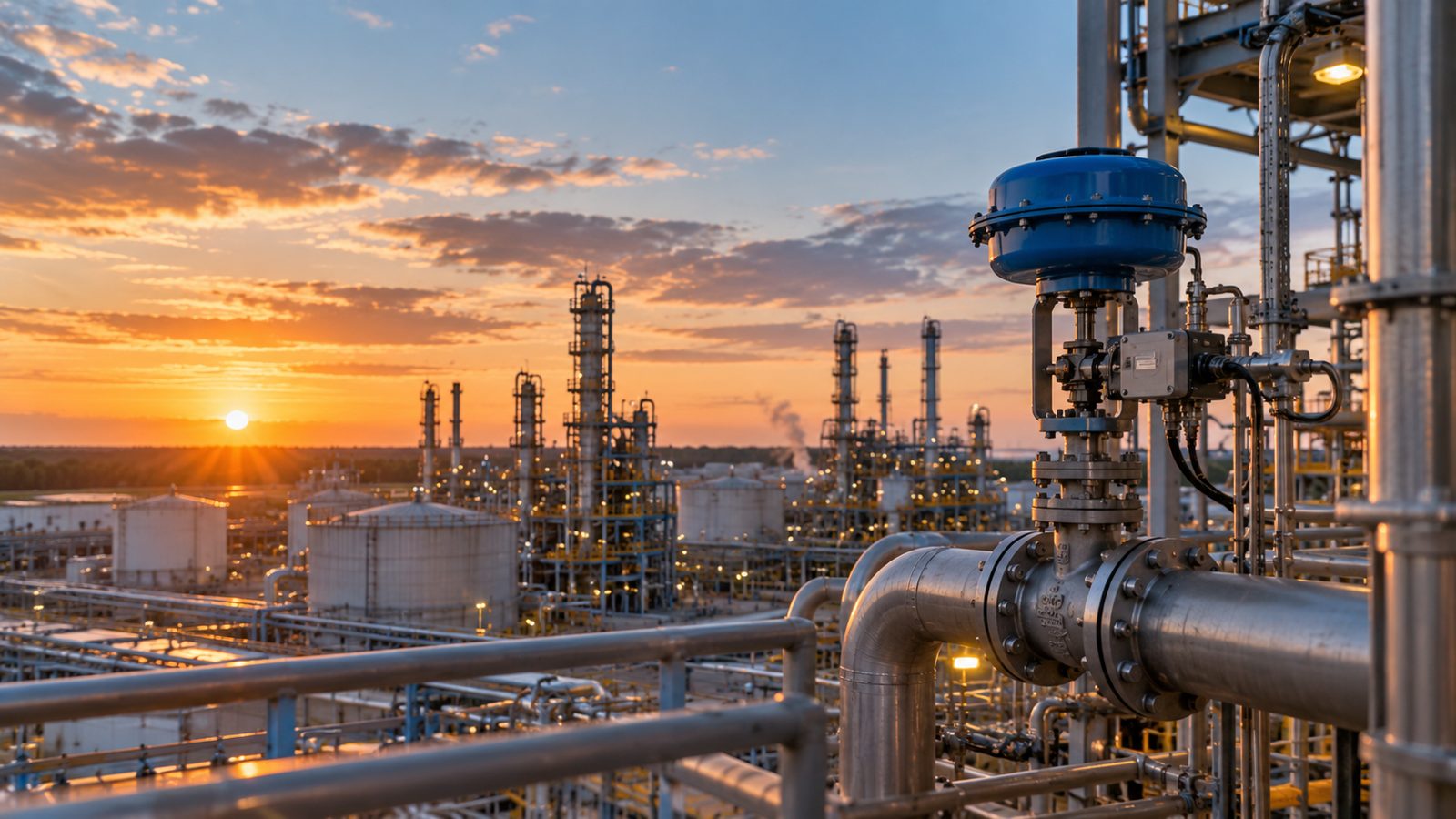
What is process control?
Process control is about mastering dynamic processes. The aim is to keep important process variables, such as temperature, pressure, flow or level, as close as possible to the desired value, even when the process is affected by disturbances or changing operating conditions.
To do so, information from the process is used to make targeted corrections. A measurement tells you what is actually happening, a control strategy determines which correction is needed and an actuator, such as a control valve, pump or drive, then acts on the process.
In the process industry this happens continuously. From a simple flow loop to several control loops working together through a cascade or other control structures. The quality of that control has a direct influence on process stability, variability, energy and raw material use and the load on equipment.
Process control therefore goes beyond just setting up a PID controller. Process dynamics, feedback, feedforward, measurements, actuators, filtering, limits and interactions between control loops also determine how well a process is ultimately controlled.
How is a control loop structured?
A control loop connects the desired state of a process with what is actually happening in the process. To do so, several components work together continuously.
The desired process value is set in the setpoint (SP). A transmitter measures the actual process value (PV), for example temperature, pressure, flow or level. The controller compares the two values and determines which correction is needed.
That correction is sent via the controller output (MV or output) to an actuator. This can be a control valve, pump, fan or drive, for example. The actuator then acts on the process, after which the change becomes visible again in the PV.
This creates a closed control loop:
SP → controller → MV → actuator → process → PV → feedback
The process itself is an essential part of the control. A change in the MV does not have an immediate effect, nor the same effect in every process. Process gain, time constants, dead time and disturbances determine how the PV ultimately responds.
That is why a control loop cannot be assessed on the controller settings alone. The measurement, the actuator, the process dynamics and any other control loops can also affect the resulting control behaviour.
Feedback and feedforward: two ways to correct a process
A process can be corrected in different ways. Two important principles in process control are feedback and feedforward. The difference lies mainly in the moment the control responds.
Feedback: correcting what is already happening
With feedback, the measured process value is fed back to the controller. The controller compares the PV with the setpoint and responds as soon as a control error arises.
A PID controller is the best-known example of this.
If a temperature rises above the setpoint, for example, the controller sees the error and adjusts the controller output to bring the temperature back.
Feedback therefore has one important characteristic: the influence of a disturbance must first become visible in the controlled process value before the controller can respond to it.
How well that works depends, among other things, on the process dynamics. Especially in processes with a lot of dead time, relatively much time can pass between a correction and the moment its effect becomes visible in the PV.
Feedforward: responding before the PV deviates
Feedforward works differently. Instead of waiting until a disturbance becomes visible in the PV, a measurable disturbance is used directly to make a correction in advance.
Suppose the feed to a process suddenly increases and it is known that this requires more heat. If that feed is measured, a feedforward control can adjust the heat input immediately, without first waiting for the temperature to start deviating.
The control thereby tries to compensate for the effect of the disturbance before it becomes fully visible in the controlled process value.
For this, it must be known how the measured disturbance affects the process. A feedforward control therefore depends on usable measurements and sufficient knowledge of the relationship between the disturbance and the required correction.
Feedback and feedforward complement each other
Feedforward does not usually replace feedback. In industrial applications the two are in fact combined.
Feedforward can compensate early for known and measurable disturbances. Feedback then corrects the remaining deviations, for example because the process model is not exactly right or because not all disturbances are measurable.
The two principles thus have a different function within the same control strategy.
A process that keeps responding to the same predictable disturbance despite a well-tuned PID controller does not therefore automatically need a different Kp or Ti. It can also mean that the control structure itself needs to be examined further.
That is an important principle in process control: not every control problem is a PID tuning problem.
From one control loop to several control loops
Not every process can be controlled optimally with a single, separate control loop. In industrial plants, process variables influence each other and several controllers often work together to achieve one process objective.
A well-known example is cascade control. Here two controllers work in series. The first controller is often called the master and the second the slave.
The master guards the most important process variable. The output of this controller is used to set the setpoint of the slave. The slave then controls an underlying process variable and drives the actuator.
A practical example is controlling the water level in a steam drum. The master guards the drum level. When the level changes, this controller determines how much feedwater is needed. This required feedwater flow is passed on as a setpoint to the slave. The slave compares this setpoint with the actual measured feedwater flow and adjusts the feedwater valve.
In simplified form, the control structure looks like this:
Drum level → master level controller → feedwater flow SP → slave flow controller → feedwater valve
The slave can quickly correct changes in the feedwater flow, while the master focuses on the slower behaviour of the drum level. For a well-working cascade, the underlying slave must therefore usually respond clearly faster than the master.
In practice, drum level controls can be more extensive, for example with steam flow and feedwater flow as additional signals. This is often used to absorb changes in steam load more quickly.
Cascade thus shows that good control behaviour is not determined only by the settings of one PID controller. The structure, relative speed and cooperation of control loops also determine how the overall process responds.
What determines the performance of a control loop?
A control loop functions as a chain. From the measurement of the process to the final movement of a valve, pump or other actuator, every part must perform its function well. Performance is therefore not determined by the controller alone.
A reliable measurement is essential. The controller takes decisions based on the measured process value. Measurement noise, delay or a deviating measurement can therefore directly affect the control behaviour.
The same applies to the actuator. A controller can calculate a correct output, but if a control valve has friction, play, saturation or a non-linear characteristic, for example, the process need not respond as the controller expects.
In addition, an industrial plant is constantly affected by disturbances and changing operating conditions. Changes in load, feed flows, temperatures or compositions can be handled by several control loops at the same time. As a result, control loops can also influence each other.
Good control behaviour therefore arises from the cooperation between measurement, control strategy, actuator and process. When a control loop does not perform as expected, the complete loop must be examined before concluding that only the PID settings need to be changed.
Every second counts
In a continuous process, small deviations can keep repeating themselves. Unnecessary variation, slow corrections or extra actuator movement may seem limited at any one moment, but over thousands of operating hours they can become significant.
Good process control is therefore not only about preventing faults. It is also about a process that keeps performing in a stable, controlled and efficient way.
Frequently asked questions
What is process control?
Process control is the field concerned with automatically correcting dynamic processes. The aim is to keep process variables such as temperature, pressure, flow and level at the desired value, even when disturbances or changing operating conditions affect the process. In the process industry this is done with control loops: a measurement, a controller (usually a PID controller) and an actuator such as a control valve or pump.
What is a control loop?
A control loop is the closed chain of setpoint (SP), controller, controller output (MV), actuator, process and measurement (PV). The controller compares the measured process value with the setpoint and adjusts the actuator; the effect is measured again and fed back. The process itself, with its process gain, time constants and dead time, is a full part of that loop.
What is the difference between feedback and feedforward?
Feedback corrects based on a deviation that is already visible in the measured process value. Feedforward uses a measured disturbance to correct in advance, before the process value deviates. Feedforward requires knowledge of how that disturbance affects the process and does not usually replace feedback; in practice the two are combined, with feedback removing the remaining deviations.
What is cascade control?
In cascade control, two controllers work in series. The master guards the most important process variable and uses its output to set the setpoint of the slave, which controls an underlying, faster variable and drives the actuator. A well-known example is the drum level control of a steam boiler, where the level controller sets the setpoint of the feedwater flow controller. The slave must respond clearly faster than the master.
Further reading on process control
Process control consists of various topics that each deserve their own in-depth treatment. Think of PID control, process dynamics, tuning methods, feedforward and cascade. In our knowledge base we cover these topics separately and in increasing depth.
Want your control loops analysed?
Would you like to know how your control loops really perform? PID Dynamics analyses historical process data to map the control behaviour and possible improvements technically.
See the full programme or get in touch with us for more information.